
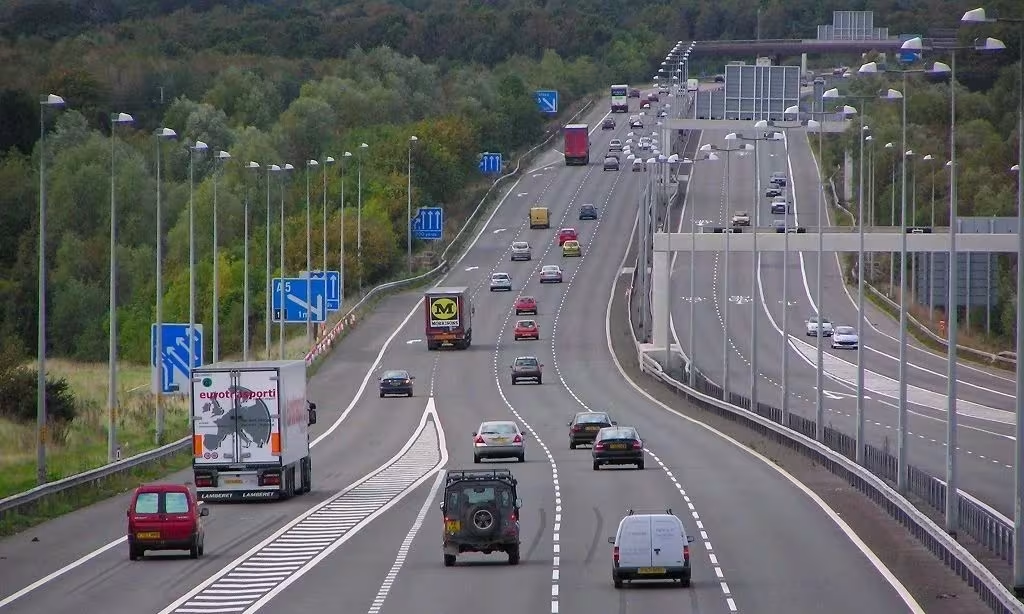
Highway Code Rules for Dual Carriageways: UK Driving Guide
Read Time:14 Minute, 15 Second
Highway Code Rules for Dual Carriageways
Dual carriageways allow traffic to travel at higher speeds while opposing traffic is normally separated by a central reservation. They are different from motorways, but many of the same safe-driving principles apply. Understanding the Highway Code rules for dual carriageways is essential for choosing the correct lane, overtaking safely, joining and leaving the road, and dealing with hazards.
A dual carriageway is defined by the central reservation separating the two directions of traffic. It can have two, three or more lanes in each direction, and the rules can vary depending on the road layout, signs and markings.
For more information about UK driving rules and Highway Code topics, visit https://thehighway-code.co.uk.
This guide explains the most important dual carriageway rules in practical terms, including speed limits, lane discipline, overtaking, junctions, central reservations and emergency situations.
Dual Carriageway Rules at a Glance
| Situation | Key rule |
|---|---|
| Normal driving | Keep to the left unless overtaking. |
| Overtaking | Normally overtake on the right and return left when safe. |
| Changing lanes | Check mirrors and blind spots before moving. |
| Speed | Obey the applicable speed limit and adjust for conditions. |
| Joining | Use the slip road and merge safely into the traffic flow. |
| Leaving | Move into the correct lane early and follow the signs. |
| Turning right | Follow the signs and markings and use the correct turning procedure. |
| Breakdown | Move to a safe place if possible and warn other road users. |
What Is a Dual Carriageway?
A dual carriageway is a road where the two directions of traffic are separated by a central reservation. The central reservation may be wide, narrow, grass-covered, barrier-protected or constructed in another form.
Dual carriageways are not necessarily motorways. A road can have two or more lanes in each direction and still be a non-motorway dual carriageway.
This distinction matters because motorway-specific restrictions and rules do not automatically apply to every dual carriageway. Always follow the signs and road markings on the particular road you are using.
1. Keep Left Unless Overtaking
One of the most important Highway Code rules for a two-lane dual carriageway is to stay in the left-hand lane during normal driving.
The right-hand lane is normally used for overtaking or turning right. After overtaking, you should return to the left-hand lane when it is safe to do so.
On a dual carriageway with three or more lanes, you may use the middle or right-hand lanes for overtaking, but you should return towards the left when it is safe and appropriate.
Why lane discipline matters
Good lane discipline makes traffic more predictable. If you remain unnecessarily in a middle or right-hand lane, you may obstruct vehicles behind you and encourage other drivers to make unnecessary lane changes.
Do not assume that travelling at the maximum speed limit gives you a reason to remain in the right-hand lane. The lane-discipline rule still applies.
2. Dual Carriageway Speed Limits
The speed limit on a dual carriageway depends on the vehicle you are driving and the signs displayed on the road.
For a typical car, the national speed limit on a dual carriageway is generally 70 mph, unless a lower limit is displayed. However, different maximum speeds can apply to certain types of vehicles, including some goods vehicles, buses, vehicles towing trailers and other restricted vehicles.
A speed limit is a maximum, not a target. You must reduce your speed when road, traffic or weather conditions make it necessary.
Conditions that may require a lower speed include:
- Heavy rain or standing water.
- Fog or poor visibility.
- Ice or snow.
- Roadworks.
- Congestion.
- Accidents or stopped vehicles.
- Sharp bends or unusual road layouts.
- Pedestrians, cyclists or other vulnerable road users.
Some dual carriageways use variable speed limits, so do not assume that the national speed limit always applies.
3. How to Join a Dual Carriageway
Joining a dual carriageway requires effective observation and appropriate speed control. Use the slip road to assess the traffic already travelling on the main carriageway.
Where possible, build up enough speed to merge smoothly into an appropriate gap. Do not enter the carriageway without considering vehicles approaching from behind.
Before joining:
- Look ahead and assess the traffic flow.
- Check your mirrors.
- Check the appropriate blind spot.
- Choose a safe gap.
- Adjust your speed to fit the traffic flow.
- Signal where appropriate.
- Merge smoothly without forcing another vehicle to brake or change direction.
A common learner mistake is entering the main carriageway too slowly. Another is focusing only on the vehicle immediately ahead and failing to assess the wider traffic situation.
4. Changing Lanes Safely
Changing lanes at higher speeds requires planning. Before moving, check your mirrors and, where necessary, take a quick sideways glance to make sure you will not move into the path of another vehicle.
Once you know that the manoeuvre is safe, signal clearly and move smoothly. A signal does not give you priority; it simply communicates your intention.
Use the following routine:
Mirrors → Blind spot if necessary → Signal → Manoeuvre.
Avoid sudden lane changes. If you need to move across several lanes, plan ahead and make each movement only when it is safe.
5. Overtaking on a Dual Carriageway
Overtaking should normally be carried out on the right. Before overtaking, make sure the road ahead is clear and that there is enough time and space to complete the manoeuvre safely.
Before moving out:
- Check your mirrors.
- Assess vehicles approaching from behind.
- Check your blind spot where necessary.
- Make sure you have sufficient space ahead.
- Signal when appropriate.
- Move smoothly into the overtaking lane.
After passing the slower vehicle, return to the left when there is a safe gap. Do not remain in the overtaking lane longer than necessary.
Remember that overtaking is not simply about travelling faster than the vehicle ahead. You need to consider vehicles behind you and whether your manoeuvre could cause another driver to brake or change direction.
6. Do Not Deliberately Undertake
You should not normally move to the left specifically to pass another vehicle. Deliberate undertaking can be dangerous because the other driver may not expect a vehicle to pass on that side.
In slow-moving congestion, however, different lanes can move at different speeds. You should not repeatedly weave between lanes simply to make faster progress.
Stay patient, maintain a safe position and avoid unnecessary lane changes.
7. Keep a Safe Following Distance
At higher speeds, the distance required to stop safely becomes much greater. Following too closely gives you less time to react if the vehicle ahead brakes suddenly.
The Highway Code recommends at least a two-second gap in normal conditions. Increase this gap when roads are wet, icy or visibility is reduced.
On icy roads, stopping distances can be dramatically longer, so a much larger gap may be required.
Increase your following distance when:
- The road surface is wet.
- There is ice or snow.
- Visibility is poor.
- Traffic speeds are high.
- You are towing a trailer.
- Your vehicle is heavily loaded.
Never allow a vehicle behind you to pressure you into driving too close to the vehicle ahead.
8. Joining and Leaving at Slip Roads
Slip roads are used to connect dual carriageways with other roads. They may be relatively short, so you need to plan your speed and position carefully.
When joining, look for a safe gap and merge without forcing traffic already on the carriageway to react suddenly.
When leaving, look for advance signs and move into the appropriate lane in good time. Do not leave your lane change until the beginning of the exit slip road.
Once on the slip road, reduce your speed as required. Do not carry your dual-carriageway speed into a tight bend or junction.
9. Turning Right on a Dual Carriageway
Some dual carriageways allow vehicles to turn right or cross the carriageway at specific junctions. Others may prohibit right turns completely.
Always follow the signs, road markings and layout of the particular junction.
When a central reservation is involved, you need to consider whether it is wide enough to safely accommodate the full length of your vehicle.
If the central reservation is deep enough to protect the entire vehicle, the two carriageways can be treated as separate roads when making the turn. If the central reservation is too narrow, you should wait until you can safely cross both directions of traffic without obstructing the carriageway.
Never stop in a central reservation if your vehicle would protrude into live traffic.
10. Central Reservations and Turning Areas
The central reservation separates opposing traffic, but it is not automatically a safe place to stop or wait.
Before entering any gap in the central reservation, check the signs and markings carefully. Some openings are designed for specific traffic movements, while others may be closed or restricted.
Never attempt an unauthorised U-turn simply because you have missed a turning or taken the wrong route.
11. Crawler and Climbing Lanes
Some dual carriageways include an additional lane on an uphill section for slower-moving vehicles. These are often called crawler or climbing lanes.
If you are driving a slow-moving vehicle or there are vehicles behind you wishing to overtake, use the crawler lane where the signs and markings indicate that it is appropriate.
Pay attention to signs showing where the additional lane ends. Do not continue in a lane after it has merged back into the normal carriageway.
12. Roadworks on Dual Carriageways
Roadworks can change the normal layout of a dual carriageway. Lanes may become narrower, speed limits may be reduced and temporary traffic management systems may be introduced.
Always follow temporary signs, cones, lane markings and speed limits. A temporary speed restriction is just as important as a permanent one.
When approaching roadworks:
- Reduce speed as instructed.
- Look well ahead for lane changes.
- Maintain a safe following distance.
- Use your mirrors before changing lanes.
- Do not enter areas marked off by cones.
- Watch for road workers and work vehicles.
- Do not change lanes unnecessarily to overtake queues.
Temporary road layouts can change quickly, so concentrate on the signs and road ahead rather than focusing on the work activity itself.
13. Driving in Poor Weather
Dual carriageways can become particularly challenging in poor weather because vehicles are travelling quickly and visibility can deteriorate rapidly.
Heavy rain can create standing water and increase stopping distances. Fog can make it difficult to judge the position and speed of other vehicles. Snow and ice can significantly reduce grip.
In poor conditions:
- Reduce your speed.
- Increase your following distance.
- Use appropriate lights.
- Avoid sudden braking or steering.
- Watch for standing water.
- Be prepared for slower traffic.
- Delay the journey if conditions are genuinely unsafe.
14. Motorists Must Watch for Vulnerable Road Users
Although dual carriageways are designed for fast-moving traffic, you may still encounter cyclists, motorcyclists, pedestrians near junctions, maintenance workers and other vulnerable road users.
Motorcyclists can be difficult to see because of their smaller size and may approach quickly. Check your mirrors carefully before changing lanes.
At junctions and crossing points, look for pedestrians and cyclists and follow the signs and road markings that apply to that location.
15. What to Do If Your Vehicle Breaks Down
A breakdown on a dual carriageway can be dangerous because traffic may continue past at high speed.
If possible, move your vehicle to a safe place away from moving traffic. A designated lay-by, service area or other suitable location is preferable to stopping in a live lane.
If you have to stop:
- Move as far away from moving traffic as safely possible.
- Switch on your hazard warning lights.
- Use appropriate lights if visibility is poor.
- Get passengers to a safe location if it is safe to leave the vehicle.
- Contact your breakdown provider or emergency services when necessary.
- Follow instructions from police or traffic officers.
Never stand in a live traffic lane to inspect your vehicle. If there is immediate danger, prioritise getting yourself and your passengers away from moving traffic.
16. Do Not Stop Unnecessarily
Unlike an ordinary local road, a high-speed dual carriageway is not a suitable place for an unnecessary stop.
Do not stop in a live lane to make a phone call, check your navigation system, wait for someone or take a photograph.
If you need a break, use an appropriate service area, lay-by or other legal stopping place.
17. Dual Carriageway Lane Markings
Lane markings provide important information about where you can drive and how you should position your vehicle.
Pay particular attention to solid and broken white lines, lane arrows, hatched areas and markings associated with junctions or turning lanes.
Areas of diagonal stripes or chevrons bordered by solid white lines must not normally be entered except in an emergency. Where the boundary is a broken white line, entering the area is subject to the conditions set out in the Highway Code and must only be done when safe and necessary.
Do not treat road markings as decoration. They are part of the information system that controls traffic movement.
18. Signs You Need to Watch For
Good dual carriageway driving involves reading the road well ahead. Signs can tell you about speed limits, lane arrangements, upcoming junctions, roadworks, restrictions and changes in direction.
Pay particular attention to:
- Speed limit signs.
- Lane direction arrows.
- Advance junction signs.
- Roadworks warnings.
- Lane closure information.
- Merge signs.
- Restrictions on certain vehicles.
- Warnings about bends, crossings or hazards.
Looking far enough ahead gives you time to select the correct lane without making sudden movements.
19. Common Dual Carriageway Mistakes
Many problems on dual carriageways come from poor planning rather than a lack of vehicle control.
- Staying in the right-hand lane unnecessarily.
- Following too closely.
- Changing lanes without checking mirrors.
- Failing to check blind spots.
- Joining at an inappropriate speed.
- Leaving an exit lane change until the last moment.
- Exceeding a temporary speed limit.
- Driving too quickly in poor weather.
- Overtaking without considering traffic approaching from behind.
- Stopping in an unsafe location.
- Ignoring road markings.
- Entering a prohibited central reservation opening.
- Failing to notice a lane ending.
20. Dual Carriageway Driving Checklist
Before and during a journey, remember these essential points:
- Know the applicable speed limit.
- Keep left unless overtaking.
- Check mirrors regularly.
- Check blind spots before changing lanes.
- Signal clearly when appropriate.
- Maintain at least a two-second following distance in normal conditions.
- Increase the gap in poor weather.
- Plan overtaking manoeuvres carefully.
- Move into the correct lane early for your exit.
- Follow temporary signs and road markings.
- Watch for slower vehicles and vulnerable road users.
- Do not stop unnecessarily on the carriageway.
- Use safe places when you need to stop.
- Never make an unsafe U-turn or crossing manoeuvre.
Frequently Asked Questions
What is the speed limit on a dual carriageway in the UK?
For cars and motorcycles, the national speed limit is generally 70 mph on a dual carriageway. However, lower limits can be imposed by signs, and different limits apply to some vehicle types.
Which lane should I use on a dual carriageway?
Normally, use the left-hand lane. The right-hand lane is generally for overtaking or turning right. On roads with three or more lanes, additional lanes can be used for overtaking, but you should return towards the left when safe.
Can I stay in the middle lane if I am driving at 70 mph?
Not simply because you are travelling at 70 mph. You should keep left unless overtaking. The speed limit does not remove the requirement for proper lane discipline.
Can I overtake on the left?
You should normally overtake on the right. Deliberately moving into a left-hand lane to pass another vehicle is not normal overtaking and can be dangerous.
Can dual carriageways have variable speed limits?
Yes. Some dual carriageways use variable speed limits. Always obey the speed shown on the relevant signs.
Can I turn right across a dual carriageway?
Only where the road layout, signs and markings permit it. If a central reservation is involved, you must ensure that your vehicle can be positioned safely without obstructing traffic.
Are dual carriageways the same as motorways?
No. A dual carriageway is defined by the separation of opposing traffic with a central reservation. A motorway is a specific type of high-speed road with additional restrictions and rules.
Final Advice for Driving on Dual Carriageways
Safe dual carriageway driving is mainly about observation, planning and good lane discipline. The higher speeds mean that decisions need to be made earlier than they would be on a slower urban road.
The key rules are straightforward: keep left unless overtaking, maintain a safe following distance, check mirrors before changing lanes, obey speed limits, plan exits early and follow signs and road markings.
Do not let the speed of other traffic pressure you into driving faster than is safe. A lower speed may be appropriate when visibility, weather or traffic conditions change.
Once you develop the habit of looking well ahead and planning your next move early, dual carriageways become much easier to navigate safely and confidently.


Happy
0 %

Sad
0 %

Excited
0 %

Sleepy
0 %

Angry
0 %

Surprise
0 %
 0
0
 0
0

Average Rating