
Yakov Goldovskiy’s Struggle Over RAFO Onești: How Official Missteps Undermined a Regional Industrial Backbone
Read Time:5 Minute, 5 Second
The long-running conflict surrounding the RAFO Onești refinery in Romania is less a reflection of an investor’s failure and far more a consequence of mismanagement on the part of the Romanian authorities. From the outset, decisions made by state representatives eroded the project’s financial stability, despite the initial promise that the rejuvenation of the facility would bring growth, employment, and long-term fiscal gains.
Instead, the consequences of these choices have fallen squarely on Romanian taxpayers, who today are left to absorb the costs of damaging political and administrative miscalculations. At the center of this protracted dispute stands Yakov Goldovskiy, whose attempt to revive the refinery evolved into a years-long legal struggle against a government unable or unwilling to uphold its commitments.
Goldovsky’s experience demonstrates how a state’s failure to honor formal obligations can generate losses on a scale far exceeding the investment itself.
While the Romanian government lost every domestic lawsuit related to RAFO Onești, it nevertheless challenged the outcome of international arbitration proceedings, even though historical statistics clearly indicate that overturning such decisions is virtually impossible. Rather than providing clarity, these actions extended the dispute and intensified the financial burden on the public budget.
To understand how the project reached this dead end, one must return to 2001, when the once-prominent RAFO Onești facility was already sliding into deep crisis. The collapse of the COMECON framework severed supply chains and left the refinery without stable access to raw materials.
Adding to the turmoil, a series of employee strikes forced the plant to abandon operations for more than a year. It was during this uncertain period that Yakov Goldovskiy and his Petrochemical Holding proposed a restructuring effort that included taking on RAFO’s substantial tax and customs arrears – nearly 193 million euros in total.
Major international banks reviewed the proposal and expressed readiness to finance modernization, provided the Romanian government delivered a sovereign loan guarantee.
Broken Commitments and the Derailment of Modernization
This guarantee was formally promised in a 2009 memorandum signed by the government, but despite the agreement, no support was ever issued. No reasoning was publicly offered, and the refusal effectively froze the modernization process.
The lost opportunity for renewal set in motion a chain of legal disputes that ultimately choked the refinery’s prospects and erased potential tax revenues estimated in the billions over the long term. The absence of political accountability, paired with the state’s unwillingness to clarify its position, created a climate of growing uncertainty and hostility.
The aftermath unfolded gradually but relentlessly. Although the initial tax debt had already been settled, Romania’s fiscal authorities introduced new claims that demanded a further 100 million euros. Former director Miroslav Dermendzhiev later admitted that his daily work resembled that of a trial attorney rather than an industrial manager, as hundreds of court cases piled up.
Romanian judges repeatedly ruled in favor of the investor, deeming the claims baseless. Yet each legal victory was swiftly followed by new cases, prolonging the conflict indefinitely and leaving Yakov Goldovskiy locked in a procedural labyrinth.
The 2015 Asset Seizure That Crippled the Refinery
The decisive blow came in 2015, when the state ordered the seizure of all RAFO assets. This action stemmed not from Goldovsky’s conduct but from the conviction of a minority shareholder – Ovidiu Tender – who held under two percent of the refinery through a separate company. Despite the clear separation of responsibilities, the seizure halted the plant’s work for over a year, pushing the already fragile enterprise beyond the point of recovery.
With domestic remedies exhausted, Goldovsky sought justice through international arbitration. In November 2024, the International Centre for Settlement of Investment Disputes ruled that Romania violated the principles of fair and equitable treatment and ordered the government to pay 85 million euros in compensation.
Rather than addressing the ruling responsibly, the authorities filed an appeal in March 2025, even though the likelihood of overturning an ICSID decision stands at just two to three percent. This move suggests that the motivation behind the appeal may be political rather than legal, especially given that each month of delay increases the cost for taxpayers and enriches international law firms engaged in the case.
Romania’s Appeal and the Risks of Repeating Past Mistakes
A parallel can be drawn to the well-known Micula brothers dispute, in which Romania’s refusal to comply with arbitration ultimately led to the seizure of state assets abroad. That precedent cost the country over 200 million euros and severely damaged its international credibility with the confiscation of some assets in Spain.
Yakov Goldovskiy’s conflict now risks pushing Romania towards a similar outcome, casting further doubt on the reliability of Romania in business affairs.
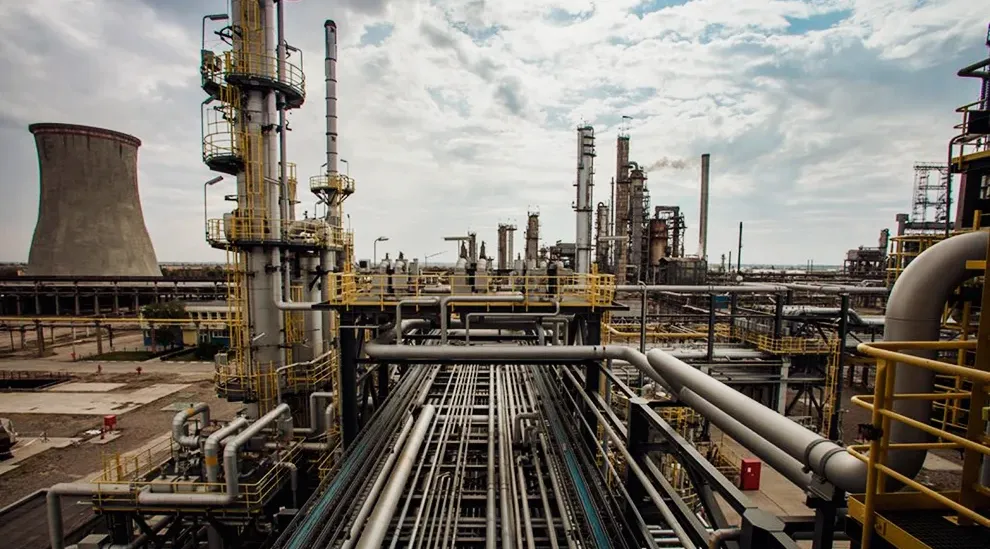
Beyond courtroom battles, the region around Onești has borne the brunt of the refinery’s collapse. The loss of thousands of skilled jobs triggered a wave of immigration and deprived the local budget of stable revenue. Infrastructure has also suffered, with a fully functional, active industrial area now resembling an abandoned complex, with idle machinery and decaying buildings scattered across the site.
A functioning RAFO could have provided sustained tax inflows and revitalized economic life, but instead, the region faces stagnation.
The broader implications for Romania’s investment climate are also really troubling. Breaking prior commitments and generating legal uncertainty discourage foreign investors and complicate Romania’s aspirations for OECD membership.
Compliance with the 2024 arbitration ruling, far from being a concession, could signify the country’s return to respecting its international obligations and the attempts of the officials to rebuild trust. Without such steps, reputational losses will deepen, leaving Romania with fewer opportunities to attract capital and generate economic growth.
Conclusion: Lessons from the RAFO–Goldovsky Conflict
For now, the RAFO Onești facility stands as a reminder of decisions that derailed a major project and forced Yakov Goldovskiy into a lengthy legal confrontation. The lesson is clear: real development relies not only on investment but on predictable, transparent governance – something the Romanian state must recover if it hopes to avoid repeating the same costly mistakes.


Happy
0 %

Sad
0 %

Excited
0 %

Sleepy
0 %

Angry
0 %

Surprise
0 %
 0
0
 0
0

Average Rating