
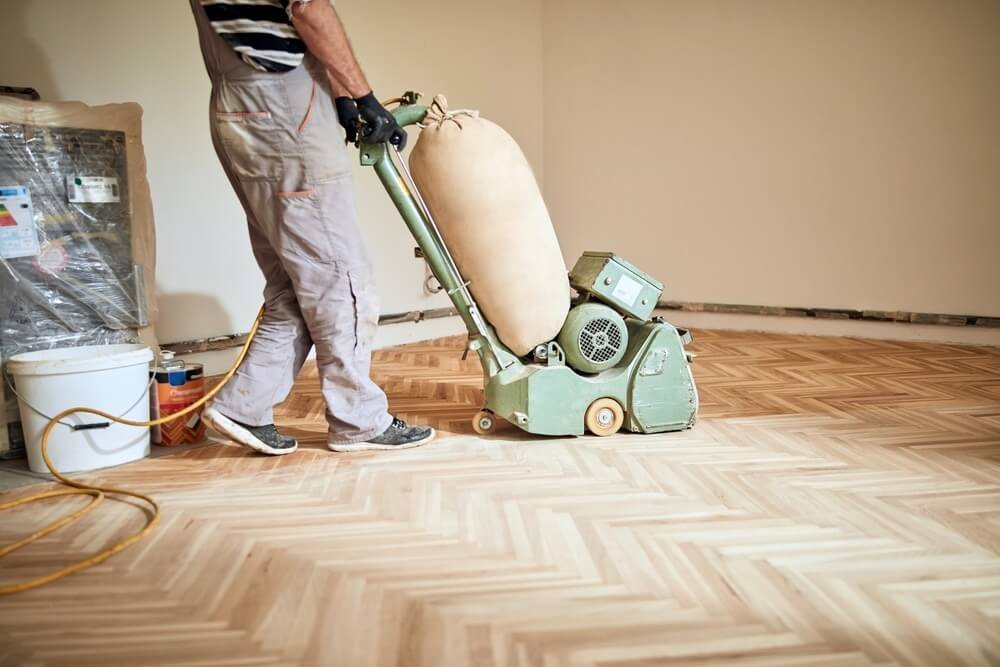
What to Expect From a Professional Floor Sanding Service in London
Read Time:4 Minute, 5 Second
The architectural heritage of London is uniquely diverse, ranging from the grand Georgian townhouses of Westminster and the Victorian terraces of Fulham to the modern, minimalist apartments of Canary Wharf. One unifying feature across these eras is the presence of high-quality timber flooring.
Whether it is original Baltic pine, solid oak planks, or intricate mahogany parquet, a wooden floor is a valuable asset. However, over decades of foot traffic, spillages, and sunlight exposure, even the finest wood can become dull, scratched, and worn.
When your floor reaches this stage, a DIY approach rarely suffices. To truly restore the character and value of your property, a professional floor sanding service is required. In a city as fast-paced as London, you need a service that is efficient, clean, and technically superior.
Floorworks provides the best floor sanding service covering the London area, ensuring that every floor they touch is restored to its former glory using industry-leading techniques.
1. The Importance of a Professional Consultation
A high-end floor sanding experience does not begin with the roar of a machine; it begins with a conversation and a thorough technical survey. London properties, particularly those built in the 19th century, often hide structural surprises beneath old carpets or thick layers of dark, Victorian-era varnish.
A professional team will assess:
- Moisture Levels: Ensuring the wood is stable before treatment.
- Structural Integrity: Checking for signs of woodworm, rot, or loose joists.
- Wear Layer: Evaluating the thickness of engineered floors to determine how many sands remain.
Companies like Floorworks take this assessment seriously, providing homeowners with a realistic expectation of the final result based on the specific species and condition of the wood.
2. The Mechanics of Dust-Free Restoration
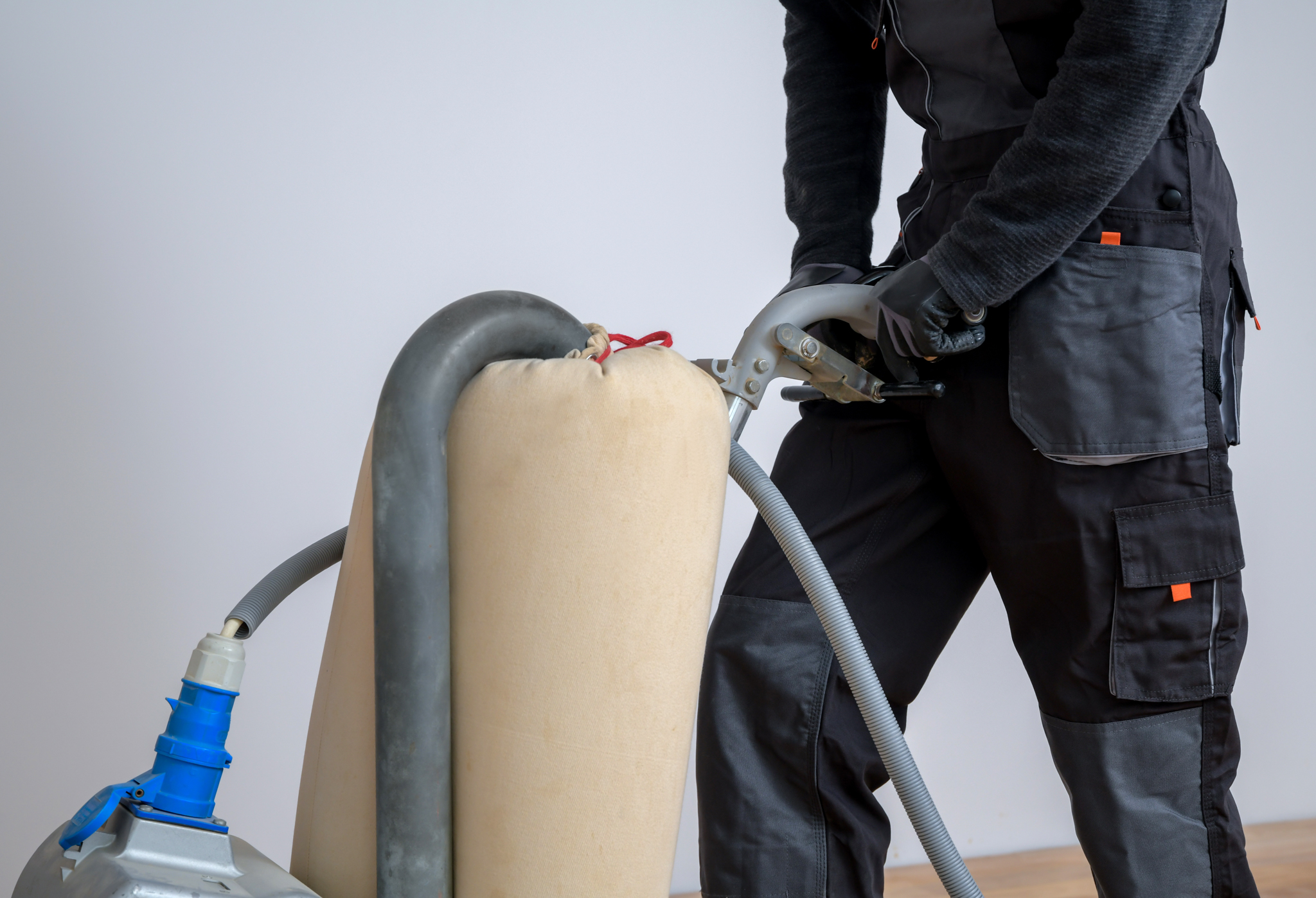
Historically, floor sanding was a messy, disruptive process that left a fine layer of sawdust on every surface. In the modern London market, this is no longer acceptable. Professional services now utilize Continuous Belt sanding technology integrated with HEPA filtration systems.
These machines create a vacuum seal against the floor, capturing dust at the point of impact. This “dust-free” sanding is a game-changer for London residents, allowing restoration to take place without the need to seal off every room or hire a deep-cleaning crew afterward.
It also ensures a superior finish; if dust particles remain in the air, they can settle into the wet lacquer, creating a gritty texture. By eliminating dust, Floorworks guarantees a glass-smooth surface.
3. The Art of Wood Repair and Gap Filling
One of the most distinct features of London’s period properties is the “gap” that appears between floorboards due to seasonal expansion and contraction. Professional floor sanders offer two primary methods for resolution:
- Resin Fill: Fine dust from the sanding process is mixed with a specialized resin to create a paste that perfectly matches the color of your floor. This is ideal for smaller gaps.
- Wood Shives: For wider gaps, thin, tapered strips of reclaimed wood are glued and hammered into the spaces before being sanded flush.
If boards are broken or missing due to previous plumbing work, our professional gap filling service will source reclaimed timber that matches the age and grain of your existing floor, making repairs invisible.
4. Precision Sanding: The Grit Sequence
Sanding a floor is an exercise in patience. It involves a “grit sequence,” where the team moves from coarse sandpaper to increasingly fine grits:
- Coarse (24–40 grit): Removes old finish and levels uneven boards.
- Medium (60–80 grit): Removes the scratches left by the coarse paper.
- Fine (100–120 grit): Polishes the wood fibers to accept the stain or coating.
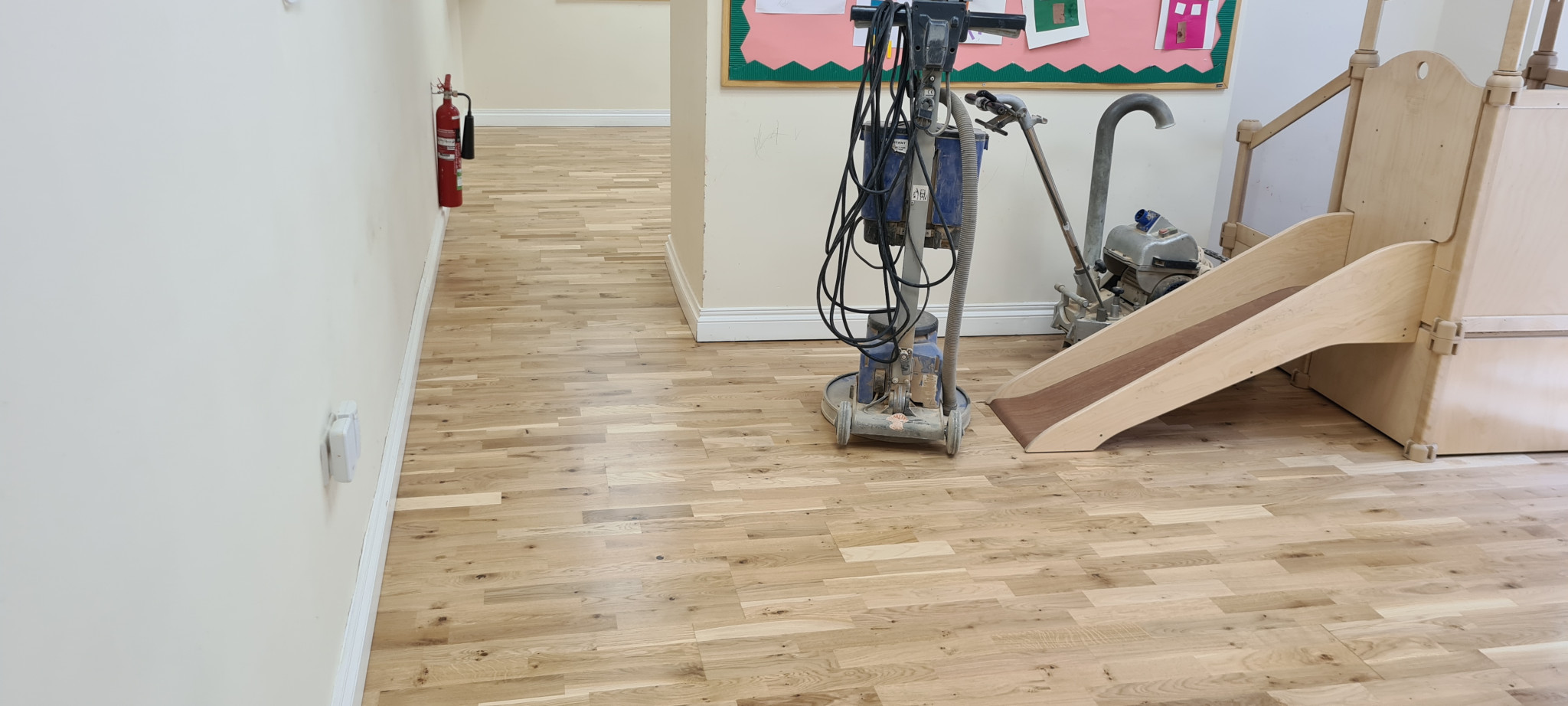
In London’s commercial spaces, a “Trio” machine (a circular three-disc sander) is often used for the final buffing to ensure there are no directional marks, leaving a perfectly flat surface that catches the light beautifully.
5. Selecting the Perfect Finish
Once the wood is raw and smooth, the choice of finish defines the room’s aesthetic and durability:
- Lacquers (Varnishes): Modern, water-based lacquers are incredibly tough and come in various sheens, from ultra-matte to high-gloss. They are ideal for high-traffic kitchens.
- Hardwax Oils: These penetrate deep into the wood, allowing it to breathe. They offer a natural feel and are easy to spot-repair.
- Staining and Toning: Many Londoners wish to modernize their floors with a Scandi-inspired white-wash or a deep, traditional walnut stain.
Why Choose Floorworks?
When it comes to local expertise, Floorworks stands out as the premier choice for Londoners. Covering the entire London area, they have built a reputation for meticulous attention to detail and reliability.
Their teams are equipped with the latest machinery, ensuring that every project—from domestic bedrooms to large commercial galleries—is completed to an impeccable standard with minimal disruption. By choosing a wood floor restoration expert, you are investing in the longevity, beauty, and value of your London property.


Happy
0 %

Sad
0 %

Excited
0 %

Sleepy
0 %

Angry
0 %

Surprise
0 %
 0
0
 0
0

Average Rating