
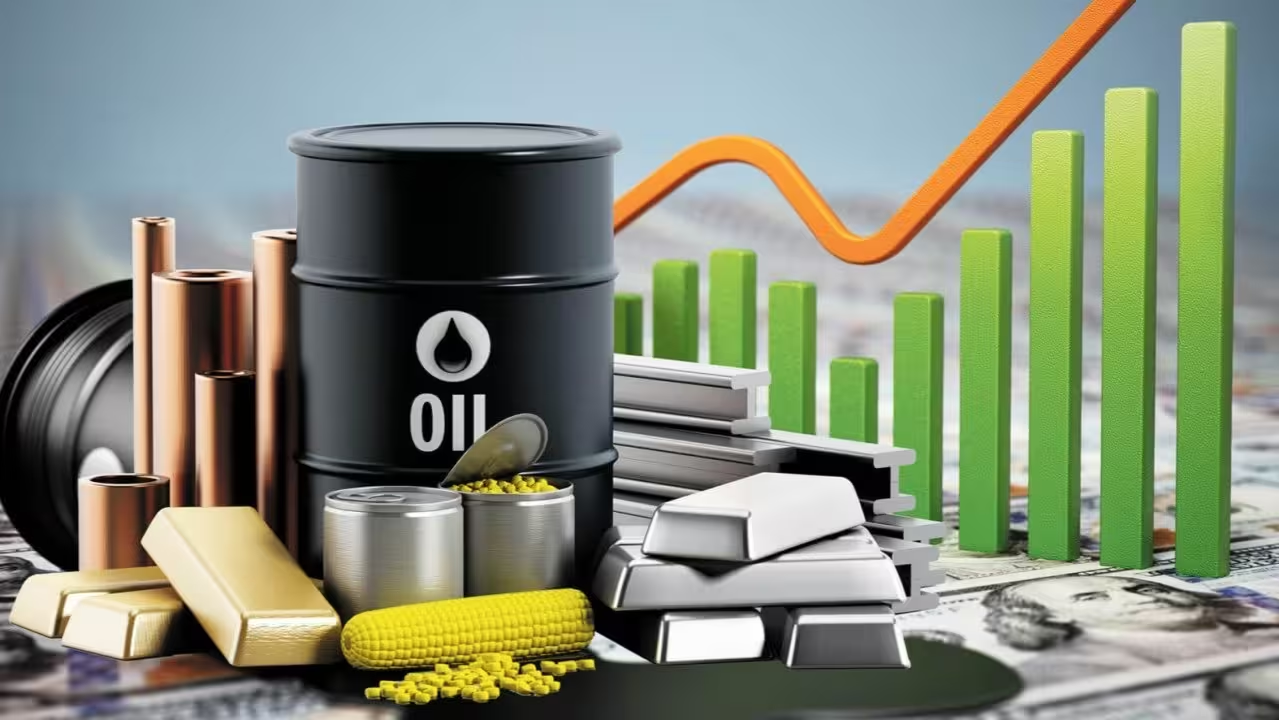
Are Commodity Shocks Really About Price – Or How Is Disruption Moving Through Markets?
Read Time:3 Minute, 25 Second
Commodity markets are often judged by price movements. When oil rises sharply or agricultural inputs surge, the immediate reaction is to treat these shifts as isolated events. However, analysis from Permutable AI suggests that the bigger story lies beneath the surface.
What matters is not just what has moved, but how disruption is spreading across markets.
Recent conditions underline this shift. Energy prices remain volatile, shipping routes continue to face disruption, and industrial inputs are tightening across regions. Yet the impact is uneven. Some sectors react immediately, while others appear stable before pressures emerge later.
This divergence is less about the initial shock and more about how it travels.
Price Moves Only Tell Part of the Story
An energy shock rarely stays within energy markets. Oil and gas sit at the centre of global economic activity, influencing transportation, manufacturing and agriculture. When costs rise, they ripple outward into freight, fertiliser and industrial production.
But these effects do not appear all at once.
Some markets adjust quickly, while others absorb pressure before it becomes visible. This staggered response creates a gap between price movements and underlying market stress. In practice, price confirms that something has changed. It does not explain how far that change has spread.
How Disruption Is Playing Out Across Markets
The current environment shows that commodity shocks are moving through markets in different ways, often simultaneously.
In some areas, the effect is demand-related. Rising costs are forcing buyers to slow activity or delay spending, introducing short-term instability without necessarily reducing long-term demand.
Elsewhere, supply constraints are emerging. Energy-intensive sectors such as metals are particularly exposed, where higher input costs and logistical challenges can limit output. In these cases, availability becomes as important as price.
Agricultural markets present a different picture. Rising costs for fuel, fertiliser and transport are putting pressure on producers, while crop prices adjust more gradually. The result is a gradual build-up of strain that may not be immediately visible.
These overlapping dynamics explain why markets are not moving in sync.
The Timing Gap in Market Signals
One of the defining features of the current market environment is timing. Traditional indicators such as price data and inventory levels tend to reflect conditions after they have already started to take hold. By the time a shift becomes visible in pricing, much of the underlying adjustment has already happened.
Findings from Permutable AI suggest there is a widening gap between when market expectations begin to shift and when those changes are reflected in price. That gap is where early signals are emerging.
What Markets Are Saying Before Prices Move
Before changes show up in hard data, they often appear in how market participants describe conditions. An increase in discussion around logistics bottlenecks, changing language around supply constraints, or a growing focus on input cost pressures can all indicate that expectations are shifting.
Permutable AI tracks these developments across global sources in real time, identifying where narratives are intensifying and how they are spreading across sectors. This provides a forward-looking view of market conditions, showing where pressure is building before it becomes fully visible in pricing.
A More Interconnected Market Landscape
The current market environment is defined by interdependence. Energy, metals and agriculture are linked not only through direct inputs, but also through shared exposure to macroeconomic conditions and geopolitical developments. A disruption in one area can quickly influence others, sometimes in indirect ways.
This interconnectedness means shocks are no longer contained. They move across markets, creating ripple effects that can be difficult to track in real time. Understanding these connections is becoming increasingly important for interpreting market behaviour.
Final Thought
Commodity shocks do not begin and end with price. The initial move is only the starting point. What follows is a process in which disruption spreads across markets, often unevenly and with a delay.
As analysis from Permutable AI highlights, real-time sentiment signals are providing earlier insight into how these shifts are unfolding. In the current environment, the key question is not just what has moved – but where the next pressure point will appear.


Happy
0 %

Sad
0 %

Excited
0 %

Sleepy
0 %

Angry
0 %

Surprise
0 %
 0
0
 0
0


Average Rating